

on autopilot across


ChatGPT

Gemini

Claude

Copilot

Meta

Deepseek

Qwen

Kimi

Perplexity

Grok

Bing
Citera finds the highest-impact search opportunities, creates and publishes the work, builds authority, and measures how rankings, AI citations, traffic, and revenue move together.
Search and AI answers are now two channels; winning one is half the job
Publishing continuously beats publishing in bursts every quarter
Execution is included, so growth is not capped by headcount































1000+
Users
10M+
ChatGPT visitors secured
400K+
Content pieces created
12K+
Backlinks built
Why organic growth stalls
It is rarely a strategy problem. It is a capacity problem.
One operating system for compounding organic growth
Research, technical work, publishing, off-property mentions and measurement — running continuously rather than in sprints.


Insight & Competitors
Live Reporting & Deep Competitor Analysis
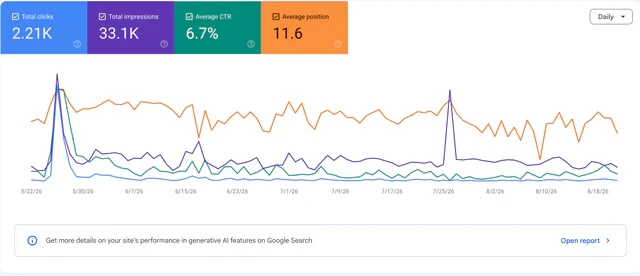
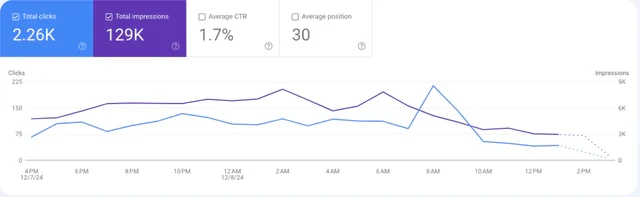
Track your impressions, clicks, and rankings in real time, and see exactly what your competitors rank for so you can take those positions.
CONTENT
Content Calendar
Your whole content pipeline across all platforms (socials, website, blogs, third-party, etc…) planned, scheduled, and published automatically, so you always know what is shipping.

KNOWLEDGE
Brand Knowledgebase
Teach the agent your product, voice, and positioning once, and it keeps everything it creates consistent with your brand from the start. Safe, quick and easy.

REACH
Automated Multichannel Publishing
Customer results










Measured, fixed, published
Citera runs the full loop — find where AI leaves you out, fix what blocks you, publish what gets cited, then check the answer again.
See where you stand
Citera runs the buying questions in your category across all AI models and records who gets named, cited, and which sources decide it.



FREE AI VISIBILITY REPORT
Does
ChatGPT,
Claude,
Perplexity &
Gemini
recommend your website? See for free.


We match your brand voice, highlight your products you sell, and create articles and content that rank and get cited without sounding like generic AI content, all data-backed from the start.










Blog




Marketing data foundation: why true ROI starts one layer below attribution
Attribution decides which touch earned the conversion. The marketing data foundation decides whether that credit means anything, and why cost aggregation, normalization and freshness set the ceiling on every ROI number reported.
Attribution decides which touch earned the conversion. Your marketing data foundation decides whether that credit means anything. Here is why cost aggregation, normalization and data freshness set the ceiling on every ROI number you report.
Content
The half of ROI almost nobody instruments
What a marketing data foundation actually has to do
Coverage is a math problem
Freshness is what turns reporting into decisions
One customer, five screens
From measurement to movement
What it looks like when the foundation holds
Nine questions to audit your own data layer
Marketing data foundation: frequently asked questions
Sources and further reading
By [author]
August 2026
6 min read
Blog
Fix the input before you tune the model. Automated buying systems reallocate budget continuously and optimize toward whatever numbers reach them. Incomplete cost data does not get corrected downstream, it gets amplified.
Coverage and normalization are the whole job. Pulling cost, performance, creative and attribution data from over 1,200 sources into one standard schema is what makes a real comparison between two channels possible.
Freshness changes behavior, not just reporting. Data that lands hourly gets acted on. Data that lands the next morning gets reviewed. The gap between those two things is measurable in wasted spend.
Every growth team can tell you how many conversions they drove last week. Far fewer can tell you, at creative level, in one number they trust, what those conversions actually cost across every channel they bought.
The return side of ROI is the easy side. Events fire, the SDK reports, the dashboard fills in. The investment side is where measurement quietly falls apart. Spend sits in dozens of self serve platforms, each with its own currency handling, its own timezone logic, its own naming conventions, its own definition of a campaign, and its own reporting lag. Some partners expose creative level cost. Some expose campaign level only. Some restate yesterday’s numbers three days later.
So teams do what teams do. Somebody builds a pipeline. Somebody else maintains it. A quarter later, half the engineering time allocated to growth is going into keeping connectors alive rather than building anything that compounds.
That was expensive when a human read the report once a day. It is a structural risk now that the report has become an input to an automated system. Measurement stopped being a document you review after the fact and became the reward signal a machine optimizes toward, which means a gap in cost coverage is no longer a gap in a spreadsheet. It is a bias in the allocation of every next dollar.
Singular was built around that specific problem. The platform unifies cost aggregation from over 1,200 sources, normalizes and deduplicates it, and delivers it with governance, fraud protection, privacy controls and enterprise grade security across every marketing channel. Attribution sits on top of that layer rather than beside it, which is the reason the ROI number at the end means something.
A data foundation is not a database and it is not a dashboard. It is the set of guarantees that make every downstream number defensible. There are four of them.
Collect completely. Aggregate and user level data have historically travelled through separate systems with separate owners, which is how two teams end up defending two different truths in the same meeting. Singular collects both through one automated process, so the granular view and the summary view are reconciled by construction instead of by argument.
Normalize ruthlessly. Every partner emits its own shape. Singular maps data from every source into one standard schema, so you can report with a consistent structure and full granularity without manual cleanup, and so that comparing a video network to a search platform to a CTV buy is an actual comparison rather than a guess dressed up as one.
Verify continuously. Numbers should match the underlying source. Continuous data operations monitoring and built in enrichment are what keep that true as partners change their APIs, which they do constantly and rarely with notice.
Protect by default. Fraud prevention, data governance and privacy controls belong in the foundation rather than bolted on at the reporting layer. Fraud that reaches your ROAS calculation has already corrupted your optimization, and a governance policy that only applies to the final report does not protect the pipeline that feeds it.
Get those four right and everything above them becomes cheaper to build. Get any one of them wrong and every model, dashboard and automated bidding decision inherits the error at full strength.
There is a temptation to treat connector counts as vanity. It is worth doing the arithmetic instead.
If 90 percent of your spend is instrumented cleanly and 10 percent is estimated, imported by hand or missing entirely, then every efficiency metric you compute is wrong by an unknown amount in an unknown direction. You cannot correct for a bias you cannot see. Worse, the uninstrumented 10 percent is almost never random. It skews toward newer channels, smaller partners and experimental buys, which is exactly the portfolio you were trying to evaluate.
Singular pulls cost and performance data from over 1,200 connectors and more than 10,000 technology and media partners. The practical effect is that the long tail of your media plan is measured the same way as the top of it, so a test on an emerging network competes for budget on the same terms as an established one. Coverage is what makes the comparison honest, and honest comparison is the only mechanism by which budget moves to where it belongs.
That principle keeps extending as new inventory appears. Singular has moved with the market on CTV with Roku, on Universal Ads as a mobile measurement partner, and on measuring ChatGPT ads alongside the rest of paid media. The pattern each time is the same. New channel, same schema, same ROI math.
Data latency sets the ceiling on how a team can operate.
Daily data supports review. Somebody opens a dashboard, notices a problem, raises it, and a change ships the following day. Two days of spend have already gone out the door at the wrong efficiency. Hourly data supports intervention, and intervention is the only thing that actually protects margin.
Singular delivers automated hourly updates so campaigns can be optimized while they are still running, with the manual reconciliation step removed from the loop entirely. The compounding benefit is not the speed itself. It is that a team which trusts the freshness of its numbers stops budgeting time for reconciliation and starts spending it on creative, incrementality and channel strategy.
The person you acquire does not experience your funnel as a set of platforms. They see an ad on a connected TV, search on a laptop, install on a phone, and convert somewhere you did not predict.
Omnichannel measurement exists to make that single journey legible. Singular unifies cost, performance, creative and attribution data across every channel and device, covering mobile, web, CTV, PC and console, with real time visibility. That includes mobile attribution, SKAdNetwork attribution, web attribution, cross device attribution and PC and console attribution in one place.
Privacy preserving frameworks made this harder rather than optional. Apple’s SKAdNetwork and AdAttributionKit changed what a conversion signal even looks like on iOS, and Google’s approach to iOS measurement continues to evolve. Aggregated and modeled signals only produce a usable ROI number when they are anchored to complete, normalized cost data. This is the point where the foundation stops being a technical detail and starts being the difference between a defensible number and a plausible one.
Creative is the same story one level down. Creative IQ connects creative performance to the same cost and attribution spine, so the feedback you hand the creative team is grounded in efficiency rather than impressions.
Measurement that stays inside a reporting tool has a hard ceiling on its value. Two capabilities move it.
The first is deep linking. Dynamic, deferred and universal links work across web, app, email, push, SMS and QR, and every click connects back to attribution and cost data, so conversions, ROAS and revenue are measured on the same basis as everything else. The user experience improvement is immediate. The measurement improvement is that owned channels stop being a black box next to paid.
The second is activation. Pipelines move aggregate and user level data across channels and deliver it straight into the warehouse powering your BI and AI work, through Marketing ETL and reverse pipelines. This is what makes an internal model or an AI marketing workflow worth building. A model trained on partially instrumented spend will learn your blind spots faithfully and then defend them with confidence.
The results customers report cluster around the same three outcomes.
Time returns to the team. Gamelight reports six hours of weekly reporting saved after consolidating ROAS and retention analytics into one view. DraftKings reports a 99 percent reduction in link generation time.
Waste comes out of the media plan. Domino’s reports 30 percent of spend saved from fraud. Tenpo reports a 60 percent ROI in operational costs following migration.
Throughput goes up where it compounds. Instabridge reports twice the creative throughput once creative decisions were driven by clear direction backed by data. Wildlife migrated 32 apps.
Singular is a G2 Momentum Leader for 2026 with a 4.6 mobile attribution score, and you can read the unedited version of all of this in customer reviews and success stories.
Run these against whatever you use today, including Singular.
What percentage of last month’s total media spend arrived through an automated connector, with no manual upload and no estimate?
Do your aggregate reports and your user level exports reconcile without a human explaining the difference?
How many engineering hours went into pipeline maintenance last quarter, and what did that team not build as a result?
How long after spend occurs can you see it, and how long after that can you act on it?
When a partner restates historical numbers, does your reporting update automatically?
Can you compare cost per outcome across a social platform, a CTV buy and a search campaign without a spreadsheet in the middle?
Is creative level cost available for the channels where creative is your main lever?
Where does fraud get filtered, before your ROAS calculation or after it?
Does the data feeding your automated bidding and your internal models come from the same verified source as the data feeding your board deck?
Any question you cannot answer quickly points at the same layer. The answers do not live in your dashboard. They live underneath it.
Attribution decides credit. The marketing data foundation decides whether credit means anything. As buying gets more automated, the value of a measurement platform is increasingly set by how completely, how consistently and how quickly it can deliver verified cost and conversion data into every system that spends your money.
That is the layer Singular was built to own, and it is why the platform starts with the data foundation rather than the report.
Schedule a demo or start free. Free for 14 days. No credit card required.
What is a marketing data foundation?
A marketing data foundation is the layer that collects, normalizes, verifies and protects marketing cost, performance, creative and attribution data before any reporting or optimization happens. It is what makes downstream ROI numbers comparable across channels, and it covers connector coverage, schema standardization, accuracy monitoring, fraud filtering, privacy controls and governance.
What is cost aggregation and why does an MMP need it?
Cost aggregation is the automated collection of ad spend data from every media source into one normalized dataset. Attribution alone establishes which touch drove a conversion, so without aggregated cost there is no denominator and no true ROI. Singular aggregates cost from over 1,200 sources and more than 10,000 technology and media partners.
How often should marketing cost and performance data refresh?
Hourly refresh is the standard to aim for, because it allows a team to correct a campaign while budget is still being spent rather than reviewing the outcome after the fact. Daily refresh limits a team to retrospective reporting, which means at least one full day of spend runs at unverified efficiency.
What does omnichannel measurement cover?
Omnichannel measurement unifies cost, performance, creative and attribution data across mobile, web, CTV, PC and console so a single customer journey can be measured across every screen it touches. It includes mobile attribution, SKAdNetwork attribution, web attribution, cross device attribution and CTV attribution in one platform.
How do you know your marketing data is accurate?
Accuracy means your reported numbers match the underlying source, verified continuously rather than audited occasionally. That requires ongoing data operations monitoring, automatic handling of partner restatements, deduplication across overlapping sources and a single standard schema so the same metric is calculated the same way for every channel.
Product and platform capabilities referenced in this article
Customer results and recognition
Market context
Primary technical documentation
Article
Comparison
Listicle
How-to
Guide
FAQ
94
/100
BLOG AEO / GEO SCORE
Direct answer in first 60 words
Question-based H2 headings
Every statistic sourced with year
Article + FAQ schema present
AI crawler access verified
Meta tags and image alt text optimized
External links
6
Internal links
8
Statistics / data points
12
JSON-LD schemas
2
View the full content
































Other solutions
Launch organic from zero
Start organic from absolute zero
All AI engines
SEO teams
Own AI search without dropping SEO
All AI engines

Rank in ChatGPT
Get recommended when buyers ask ChatGPT
ChatGPT
Replace your agency
Replace the retainer, keep the results
All AI engines
Marketing teams
Get named when AI answers your category
All AI engines

Win AI Overviews
Win the answer above the results
Google AI Overviews